
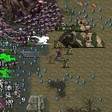
To play Warhammer Survivors, choose a character and stage, survive enemy waves, collect experience, and use level-up choices to develop your weapons and power-ups. Keep moving with an escape route available, and collect experience along safe paths instead of forcing your way through dense groups. Your immediate task is to survive the current battle, while collecting gold also contributes to becoming stronger in future runs.
Choose your survivor and understand the controls
Start by looking at your character's weapon and starting stats, because the official description says each survivor begins with a distinct combination. Treat that starting equipment as the foundation for your early upgrade decisions, rather than assuming every character should follow an identical opening. A demo-era beginner guide recommends strengthening what you already have early on, which offers a useful starting approach without establishing a universal best build.
Player-facing guidance describes combat as a combination of automatic attacks, passive upgrades, area control, and character movement. That makes positioning a useful place to focus your attention as you learn the survival loop and make upgrade decisions. Steam lists full controller support and a keyboard-only option, giving you a choice between those supported input methods.
Keep a route open through each battlefield
Continuous movement, circling enemy groups, and leaving an escape route are the central positioning recommendations in beginner guidance. Use those recommendations together: before moving around a group, look at where the route will leave you and whether you can continue moving. Avoid entering tight spaces unless your current weapons can reliably clear them, rather than treating every opening between enemies as a safe destination.
The official battlefield examples range from the open, ashen plains of Aqshy to the confined corridors of an abandoned Space Hulk. Apply the same escape-route check to whichever environment you enter, paying particular attention to narrow routes when following the beginner advice about tight spaces. Stages also have their own enemy factions and secrets, so approach a new arena as a different setting for your movement decisions.
Collect experience and give upgrades a direction
Defeated enemies drop experience that powers level-ups, and those level-up choices shape your weapons and power-ups. Beginner guidance recommends collecting nearby experience when the route is safe, while avoiding a dense pack just to reach a single pickup. Use the same movement discipline for collection as for survival: circle the group and keep an exit available instead of committing to a dangerous direct crossing.
For early upgrade decisions, a demo-era guide recommends deepening your existing setup rather than continually widening your weapon selection. Use that as a practical suggestion when learning a character, with the character's unique starting weapon and stats as your point of reference. The official feature list also includes passives and power-ups that help with survival, so consider those alongside weapons when shaping your loadout. This approach is guidance for making choices, rather than a claim that concentrating upgrades always produces the highest damage.
Build around weapons and their evolutions
The official weapon examples include a chainsword, a Bolter, and even a pot of Warhammer Paints Nuln Oil used against enemies. Weapons can be combined with power-ups and evolved into new forms, making your developing loadout part of the basic survival loop. When choosing upgrades, keep both your existing weapons and your power-ups in mind rather than treating the weapon name alone as a complete build.
A secondhand weapon report from PeepsTune offers a specific example in Lyssa Revenya's Rope and Grapnel. It describes hooks arriving from the screen edges, damaging enemies at the collision point and dragging surviving targets away. The same report describes its evolution as summoning the Ghost of Rhea, which crosses the battlefield and bursts into damaging ghostly fog. These descriptions explain the reported weapon effects without establishing an upgrade recipe or an optimal combination.
Recognize enemy pressure before it surrounds you
The official introduction includes both Skaven hordes and Tyranid swarms, while each stage has its own enemy faction. For Tyranids, PeepsTune's account of an official Steam Community feature describes Synapse creatures empowering nearby Termagants and Hormagaunts with Berserk, increasing their movement speed and damage. It also reports that killing the Synapse creature temporarily stuns nearby lesser bioforms. The feature's advice, as relayed by PeepsTune, is to dispatch Synapse-inducing Tyranids quickly to reduce the risk of being overrun.
PeepsTune's account of that feature also describes the Ork Waaagh effect as increasing enemy numbers and making enemies frenzied. When facing that kind of pressure, return to the beginner movement advice: keep moving, circle groups, and preserve an escape route. Treat these as responses to different enemy situations, rather than assuming the Tyranid Synapse interaction applies to every faction. Keep the reported enemy effects separate from your upgrade choices; they do not establish a specific required counter-build.
Prepare for bosses and progress between runs
Survive long enough and the official description says you will encounter huge bosses, including Ghazghkull Thraka and Vizzik Skour. It emphasizes choosing the right champion and loadout to overcome these threats, connecting your earlier character and upgrade decisions to the later fight. For a beginner, that provides a reason to give your build direction while continuing to follow the movement advice that helps you avoid being surrounded.
Gold collected during battle contributes to becoming more powerful in future runs, so progression extends beyond the current attempt. The battlefield also contains Warhammer paint pots that unlock new character forms and secrets. Distinguish those collectible paint pots from the separately advertised Nuln Oil weapon example: the descriptions give them different roles. Together, experience, gold, and paint-pot discoveries give you different things to pursue while surviving enemy waves.
Use demo advice with its original context
If you consult demo-era guides, keep their specific encounters and rewards in that context. One such guide describes green elites as glowing, tougher enemies that drop randomized chests. It also records rescuing Trooper Bartosz Kozlowski at a question-mark event, then choosing a Lasgun when offered to recruit him. Those are reported demo details, so treat them as version-specific guidance rather than guaranteed steps for every run.
Difficulty impressions from the demo also need that context: PeepsTune's summary of PC Gamer's hands-on preview says the reviewer found it challenging and felt battles escalated quickly. The reviewer cautioned that the demo's smaller selection of weapons and characters could influence that impression. When learning, focus on the actionable fundamentals supported by the beginner guidance: maintain room to move, collect experience safely, and develop your existing setup with purpose. Those recommendations give you a way to approach a difficult attempt without turning one reviewer's experience into a fixed difficulty rule.